Daycare Emergency Plan Template: A Guide to Childcare Safety
The Core of Childcare Safety
Running a daycare or preschool is one of the most rewarding jobs, but it comes with a massive responsibility. Parents trust you with their most precious assets: their children. While you focus on education, play, and nurturing, you cannot overlook the "what ifs." That is where a Daycare Emergency Plan becomes the backbone of your operation. It is not just a stack of papers to satisfy a licensing inspector; it is your operational manual for the worst-case scenarios.
Imagine a fire alarm blaring during nap time or a severe weather warning popping up on your phone. In those high-stress moments, you cannot rely on memory alone. You need a structured, pre-planned response. This is why having a robust Emergency Preparedness strategy is non-negotiable. A comprehensive plan ensures that every staff member knows their role, every child is accounted for, and communication with parents remains clear and calm.
Visualizing the Solution: The Template Structure
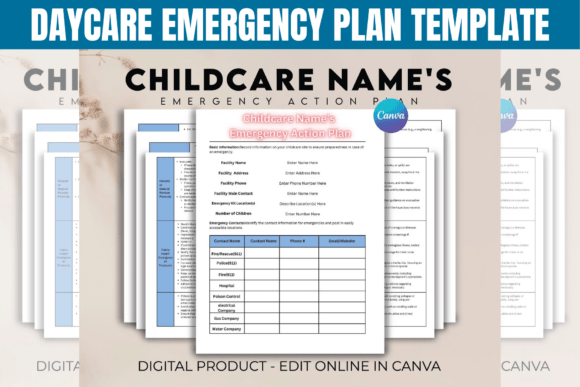
A high-quality Childcare Emergency Plan Template is more than just text; it is a piece of functional design. When you open a template created in a tool like Canva, you are looking at a document that prioritizes readability and visual hierarchy. Think about the typography choices involved. The headings are likely bold, perhaps using a clean sans serif font that commands attention instantly. This is crucial. In an emergency, a staff member needs to scan the page and find "Evacuation Routes" or "Medical Response" immediately.
The body text, on the other hand, might use a highly legible serif font or a modern sans serif typeface designed for small print. This contrast in font pairing creates a natural flow for the eye. It guides the reader from the header to the specific instructions without confusion. The overall personality of the document should feel authoritative yet approachable—professional modern typography that reassures staff that there is a system in place.
Key Sections: From Evacuation to Communication
When you download or purchase a premium font or design assets for your branding, you look for versatility. Similarly, your Emergency Plan of Action needs to cover every angle. A standard template usually breaks down into specific, critical sections. Here is what a solid plan looks like in practice:
- Emergency Contact Information: This section needs to be easily editable. You need space for parent contacts, local authorities, poison control, and your specific staff roster.
- Evacuation Routes & Assembly Points: This is where visual design shines. A placeholder for a floor plan map allows you to mark exits and safe zones. The clarity of this map can save lives.
- Severe Weather & Lockdown Procedures: Clear, step-by-step checklists. This is not the place for decorative script fonts or handwritten fonts. You need high-contrast, legible text.
- Parent Notification Protocol: Templates for text messages or emails to send during a crisis to keep parents informed without causing panic.
The goal of these sections is to eliminate hesitation. When a Daycare Emergency Plan is well-designed, it reduces cognitive load on the staff, allowing them to act rather than think during a crisis.
Customization and Brand Consistency
One of the biggest advantages of a digital template is customization. Just as you would tweak a logo design or packaging design to fit your brand identity, you should tailor your emergency plan to your specific physical space. If you run an in-home daycare, your evacuation map looks very different from a large commercial center.
Using a tool like Canva, you can edit the colors to match your daycare’s branding. This might seem minor, but it serves a practical purpose. A document that looks professional and matches your other materials—like invoices or handbooks—is more likely to be taken seriously by staff and kept up to date. It integrates into your editorial design workflow rather than looking like a generic government form.
Consider the commercial font licensing if you are creating materials for your business. Most templates come with fonts licensed for commercial use, ensuring you are compliant while you build your brand identity. This attention to detail in your marketing and operational materials signals professionalism to the parents you serve.
Practical Application for Childcare Providers
How do you implement this? Start by looking at the Daycare Emergency Plan Template as a living document. It is not a "set it and forget it" file. You need to print it out, but you also need the digital master file to make quick updates.
For example, if a staff member leaves, you must update the Emergency Contact & Staff Roles Roster. If you change rooms or move furniture, you might need to update the evacuation map. This is where an editable file becomes a vital design asset.
Here are some practical steps for managing your plan:
- Assign Ownership: Designate one person to be the "keeper" of the plan. They are responsible for updates.
- Drill Regularly: Use the plan for monthly fire drills. This reveals if the instructions are clear or if the readability is lacking.
- Review Annually: At least once a year, review the Emergency Preparedness protocols to ensure they still align with local regulations.
- Parent Access: Consider creating a simplified, one-page version for parents that outlines what they should do in the event of a pickup emergency.
The Role of Design in Safety
We often associate web design or social media graphics with the concept of "design," but the principles apply to safety documents too. A cluttered, poorly formatted emergency plan can cause confusion. By utilizing clean modern typography and logical layout, you are applying design thinking to safety.
Think about the First Aid & Medical Emergency Response Guide section. This needs to be scannable. Bullet points, bold text for key actions, and plenty of white space help a caregiver find the instructions for an allergic reaction or a fall instantly. This is the power of good editorial design applied to functional documents.
Ultimately, a Daycare Emergency Plan is about peace of mind. It allows you to focus on the joy of teaching and nurturing, knowing that you have a solid framework to protect the children in your care if the unexpected happens. It is a small investment of time that yields immense security for your business and the families you support.