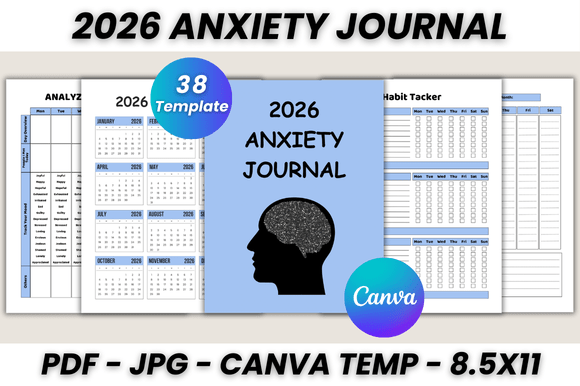
2026 Anxiety Journal Canva Template: A Designer's Guide to Mental Clarity
As designers and creative professionals, we spend our days organizing layouts, managing client expectations, and juggling deadlines. It is a high-pressure environment that often bleeds into our personal lives, leaving us feeling scattered and overwhelmed. While we obsess over the visual hierarchy of a website or the kerning of a logo, we rarely apply that same structured care to our own mental well-being. This is where the 2026 Anxiety Journal Canva Template enters the conversation. It is not just a collection of pages; it is a sophisticated design asset that bridges the gap between aesthetic appeal and functional mental health management.
This specific template is built for the coming year, offering a proactive approach to stress management. It combines the utility of a digital planner with the tactile satisfaction of a printable document. Whether you are a small business owner managing a brand identity or a hobbyist looking to organize your thoughts, this template provides a structured environment to process emotions. The visual personality of the journal is typically calming and modern, utilizing clean lines and ample white space to reduce cognitive load. It respects the user's need for clarity, avoiding the cluttered designs that often exacerbate anxiety. Instead of chaotic imagery, you will find a soothing aesthetic that encourages focus and introspection.
Strategic Applications for the Creative Professional
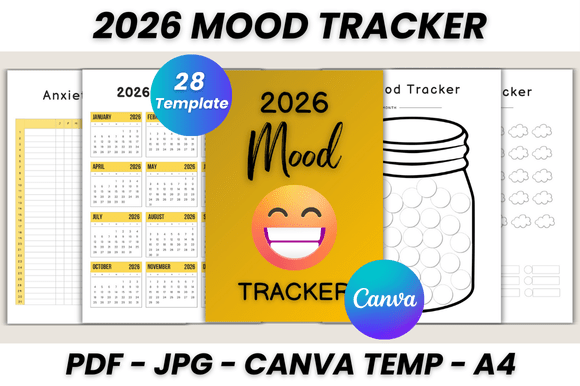
For those of us in the creative industry, the utility of a 2026 Anxiety Journal Canva Template extends beyond simple daily logging. Consider the entrepreneur or marketer who deals with high-stakes campaigns. The Mood Tracker and Stress Factor pages are invaluable tools for identifying burnout triggers. By visually mapping out your emotional state against your work schedule, you can begin to see patterns in your productivity and energy levels. This is data-driven self-care, a concept that resonates deeply with analytical minds.
Furthermore, the inclusion of a Dream Journal and Mindset sections offers a unique opportunity for creative ideation. Many designers and writers find inspiration in their subconscious. By utilizing the Dream Notes and Analyze Your Mood pages, you are not just venting stress; you are mining for creative gold. The template acts as a repository for raw ideas that can later be refined into content strategies, marketing copy, or visual concepts. It transforms the vague feeling of anxiety into actionable insights.
Design Flexibility and Customization
One of the most significant advantages of this product is its integration with Canva. We all know that static PDFs can be restrictive. However, because this is an editable Canva template, it functions as a dynamic design asset. You are not locked into a specific color palette or typography style. If your personal brand identity leans towards bold, sans-serif fonts and vibrant gradients, you can adapt the template to match. Conversely, if you prefer a minimalist aesthetic with serif fonts and muted earth tones, the layout supports that as well.
This level of customization ensures that the journal feels like a genuine extension of your personal or professional brand. It avoids the generic look of mass-market planners. You can adjust the typography to improve readability, perhaps swapping out a standard script font for a handwritten font that feels more personal and authentic. The ability to resize the pages means you can print it as a standard US Letter size for your desk or adjust it for a tablet view if you prefer a digital workflow. This flexibility makes it a versatile addition to your design assets library.
Structuring Your Year with Visual Hierarchy
The structure of the 2026 Anxiety Journal Canva Template is where the design thinking truly shines. It includes 38 printable pages, each serving a distinct purpose in the user's journey. The 2026 Calendar and Monthly Planner sections provide the macro view, allowing for long-term goal setting and appointment tracking. This is crucial for freelancers and business owners who need to balance client meetings with personal time.
Delving deeper, the specific utility pages like the Medication Tracker, Therapy Notes, and Doctor Visits offer a practical solution for managing health logistics. In the past, these details were often scattered across different apps or notebooks. Consolidating them into a single, aesthetically pleasing document reduces the friction of staying organized. The Anxiety Checklist and Breathing Tracker are particularly effective for moments of acute stress, providing immediate, actionable steps to regain composure. These elements demonstrate how good editorial design can directly impact daily functionality.
Practical Implementation Tips
To get the most out of this template, approach it as you would any other design project. Start by evaluating the content. Do you need the Habit Tracker on a daily basis, or is a weekly review sufficient? Customize the pages to fit your workflow. You might duplicate the Gratitude Log if you want to practice more frequent mindfulness, or you might hide the Dream Journal if that isn't part of your routine.
When editing, pay attention to the visual hierarchy. Ensure that your headings are distinct from your body text to make scanning easier. If you are printing the journal, consider the paper stock. A heavier weight paper can make the writing experience feel more premium and intentional. For digital use, ensure the links within the 2026 Calendar are active so you can navigate seamlessly between months. By treating this Anxiety Journal with the same respect you give your client work, you signal to yourself that your mental organization is a priority worth investing time and creative energy into.