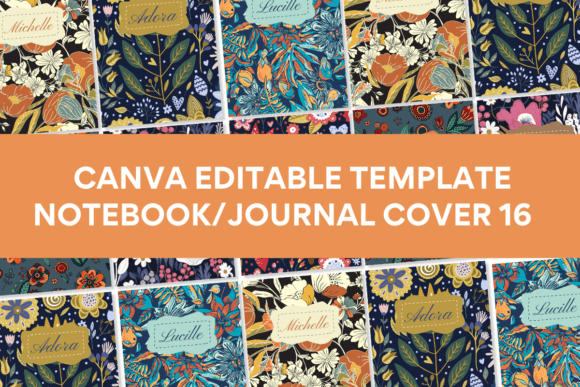
Canva Template Notebook/Journal Cover16: Design Your Own
Let's be honest. Finding the right design asset for a project can feel like searching for a needle in a digital haystack. You want something that looks professional, is easy to customize, and doesn't require a degree in graphic design to operate. That's precisely where a tool like the Canva Template Notebook/Journal Cover16 enters the picture. It’s not just another template; it's a launchpad for creators, entrepreneurs, and anyone with a story to tell. This particular set of templates is built for action, designed to help you move from a blank screen to a polished, print-ready cover in a fraction of the usual time.
What immediately sets these templates apart is their unique visual character. The designers have intentionally moved beyond Canva's standard library of elements. The illustrations, backgrounds, and design components feel distinct, giving your final product a style that stands out from the sea of generic designs you see everywhere. The personality of the Canva Template Notebook/Journal Cover16 collection leans towards a modern, clean aesthetic with a touch of handcrafted warmth. It’s a style that feels both contemporary and approachable, making it versatile enough for a high-end brand or a personal passion project. The overall appeal lies in this balance—it’s professional without being sterile, and creative without being chaotic.
Practical Applications for Every Creator
The true value of any design asset is measured by its utility. Where does the Canva Template Notebook/Journal Cover16 truly shine? Its applications are surprisingly broad, extending far beyond just creating a notebook cover. For small business owners, especially those in the print-on-demand space, this is a direct path to expanding your product line. Imagine offering a series of beautifully designed journals that align perfectly with your brand's color palette and message. You can create planners for your coaching clients, recipe books for your food blog, or guided journals that complement your wellness brand. The templates provide the professional foundation; you infuse them with your unique brand identity.
For marketers and content creators, these templates are a fantastic tool for creating tangible brand assets. Think about developing a lead magnet—a beautifully designed journal PDF that your email subscribers will love. Use a cover from this set for a workbook that accompanies your online course or a digital planner you sell on Etsy. Bloggers can use them to create printable resources for their audience, adding a layer of value and professionalism to their content. The design principles at play here are all about visual hierarchy and readability. A well-designed cover, like those in this collection, immediately communicates the quality and care that went into the product inside. It sets audience expectations and builds brand recognition from the very first glance.
Choosing and Customizing Your Template
Getting started is refreshingly simple, which is a huge part of its appeal for beginners and busy professionals alike. You do not need a Canva Pro account. The free plan is more than sufficient to access and edit the templates once you receive the link. This removes a significant barrier to entry. The process involves receiving a PDF with a direct link and clear instructions. From there, you’re in Canva’s intuitive editor. The real work is in the customization. Don't just swap out the text and call it a day. Think like a designer or a brand strategist.
First, consider the personality of the template you've chosen. Does its style match the tone of your project? A minimalist, sans-serif-focused cover works well for a modern tech business journal, while a template with organic illustrations might be perfect for a mindfulness planner. Use the template as a starting point, not a rigid cage. Experiment with the color palette to match your brand guidelines. If your brand uses a specific serif font for headings, apply it to the title on the cover. This is how you transform a generic template into a core piece of your brand identity.
Next, think about your font pairings. The templates come with suggested typography, but you have the freedom to change it. A common practice in editorial design is to pair a bold display font for the main title with a clean, legible sans serif font for subtitles or author names. This creates a clear visual hierarchy that guides the viewer's eye. You might even consider incorporating a subtle script font or handwritten font for a personal touch, like a signature or a short phrase. The key is to test these pairings directly on the template to see how they interact with the existing design elements.
Finally, think about the end use. Are you printing this? Remember that colors on screen can look different in print. If possible, order a test print from your chosen service. Is it for a digital download? Ensure the final exported file is high-resolution. The 8 x 11 inch size is a standard that works well for both print and digital formats. This template set gives you ten distinct designs, offering a solid range of design assets to start with. By thoughtfully customizing each one, you can build a cohesive collection for your business or personal projects, ensuring your work looks polished, professional, and uniquely yours.